

I recently wrote an essay about what ICSB owes the day it built. I called the idea the builder's obligation. This is the more honest companion piece, about the part of building that nobody warns you about.
One of my earliest memories is my father working late at his desk, papers spread out, a cup of tea going cold beside him. I was small enough that the desk was at my eye level. I remember thinking that whatever he was doing must be important, because he was giving so much of himself to it. Years later I understood what I was actually looking at. I was looking at a small business. Not a case study, not a statistic, not a line in a development report. A man at a desk, giving himself to something, with a family built around it.
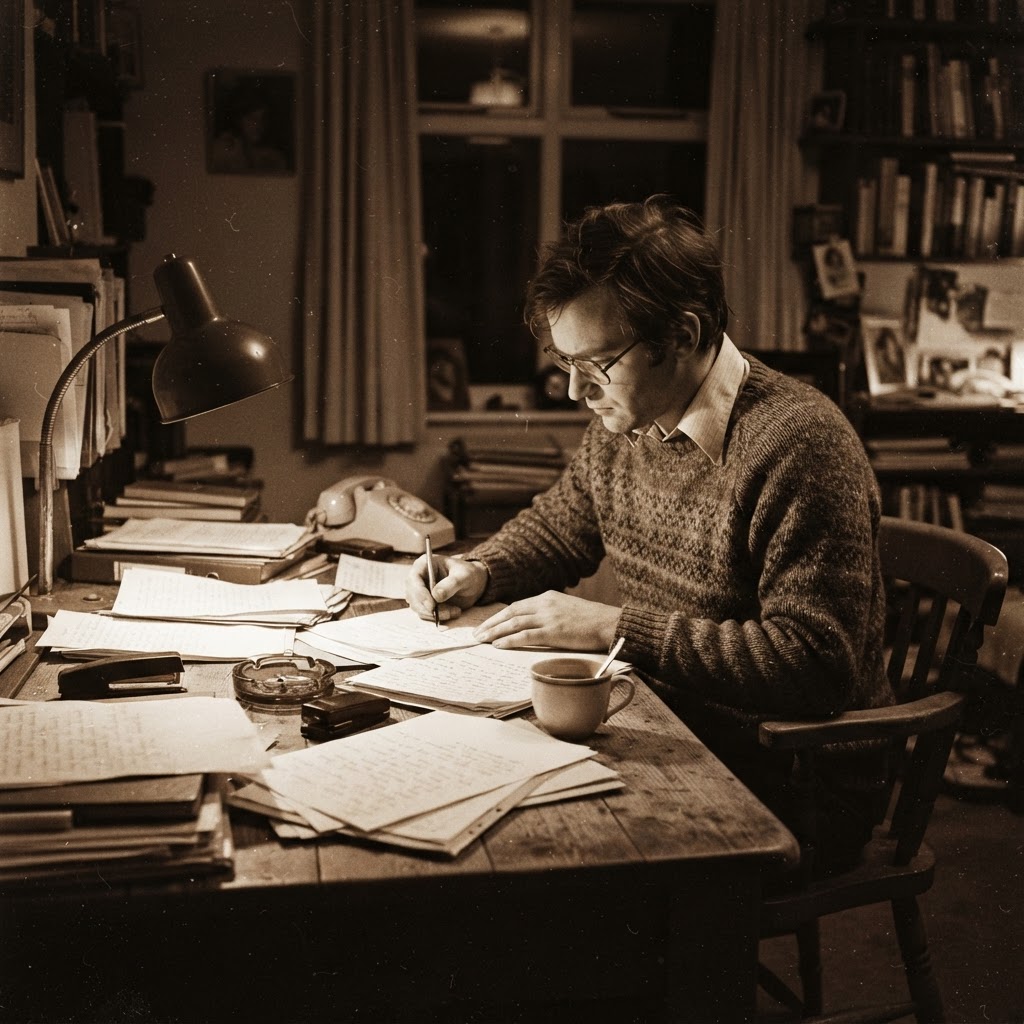
My father, Zuhier ElTarabishy, was an entrepreneur. My mother was his partner. I was born in Kuwait to an Egyptian father and an Italian mother, and our home ran on entrepreneurial energy the way other homes run on routine. It also ran on a quiet principle that was never discussed, only lived: you owe something to those who came before you, and to those who will come after you.
That principle is why, in 2016, through my work leading ICSB, I began carrying an idea to the United Nations. The world had days for nearly everything except the people at those desks. The United Nations had days dedicated to everything from forests to oceans. It did not have one for the hundreds of millions of people who hold up half the global economy: the shop owner in Cairo, the seamstress in Bridgetown, the trader in Kinshasa, the founder in Seoul. They almost never hear the world say thank you. I knew one of them personally. I grew up in his house. Ambassador Martín García Moritán and the Permanent Mission of Argentina carried the idea with me into the General Assembly, and in 2017, 54 Member States said yes. June 27 became the day for the people at the desks.
From the first moment, I placed it in the world's hands. A day built for the world has to belong to the world, or it is not what it claims to be. That was the whole design, and I would design it the same way again. But there was one thing I never placed in anyone's hands, because it is not the kind of thing that can be handed over: the fact that we built it. The day is the world's. The making of it belongs to the makers. Those two truths were supposed to live together comfortably, and for years they did.
Here is the dilemma nobody warns you about. When you give something to the world, some will treat the giving as proof that it was never yours to begin with. The day grew, as I hoped it would. Institutions embraced it, as I hoped they would. And somewhere along the way, some began to tell its story as if it had always been theirs, as if the idea arrived from nowhere, as if no one had spent years in Mission waiting rooms making the case that a shop owner deserved a day. Rooms were convened without the people who built the first ones. Histories were written with the beginning left out.
I will be honest about how that feels, because pretending otherwise would make this essay dishonest. It hurts. Not because I want the day back. I never owned it and never wanted to. It hurts the way it would hurt to watch someone move into a house you built for your family and quietly take your name off the door, while assuring everyone the house simply appeared. The gift was real. The erasure is also real. Both things are true at once, and holding both at once is the builder's dilemma.
So what does a builder do? The tempting answers are the wrong ones. Grip harder, and you become the owner you promised never to be. Say nothing, and you teach the next generation of builders that generosity is how you get erased. My father's principle points to a third way. You owe something to those who came before you and those who come after you. What you owe them is the truth, kept whole.
Not fought over. Kept.
That is why, when the day turns ten in 2027, we are bringing back everyone who was there at the beginning. The Missions. The ministers. The first partners. The scholars. The entrepreneurs. Not to reclaim anything, because there is nothing to reclaim from a gift. They are coming to tell the story together, in one room, while the people who made it are still here to tell it. Institutions may choose whom they invite to a room, but they cannot choose who was present when history was made. The record does not need to be defended. It needs to be remembered, out loud, by the people who lived it.
My father passed away recently. The book I spent years editing, Human-Centered Entrepreneurship, is dedicated to him, and finishing it taught me that legacy is not metaphorical. It is expressed in the decisions you make when no one is watching. My standard is no longer what is impressive. It is what would have made him nod. I do not think he would nod at bitterness. I think he would nod at a table with every builder seated at it, telling the true story, with room left for the ones who tried to forget it. So that is the table I am setting.
I have two sons, Jad and Yousef. One day they will build things of their own, and if they build them well, someone may try to take their place in the story, too. When that day comes, I want them to have this essay. Not as a warning against giving. As instructions for what to do after you give: keep building, keep the door open, and keep the witnesses close.
Work, done seriously, is a form of love. My father taught me that without ever saying it. And love, I have learned, does not stop the world from taking. It refuses only one thing: to let the taking change who you are.
The day belongs to the world. That was the design, and it always will be. The making of it stays with the makers. That was never on the table, and it never will be. A builder learns to hold both truths at once. I hold them gladly.